Coral Planting Project
Coral Planting Project
珊瑚种植计划
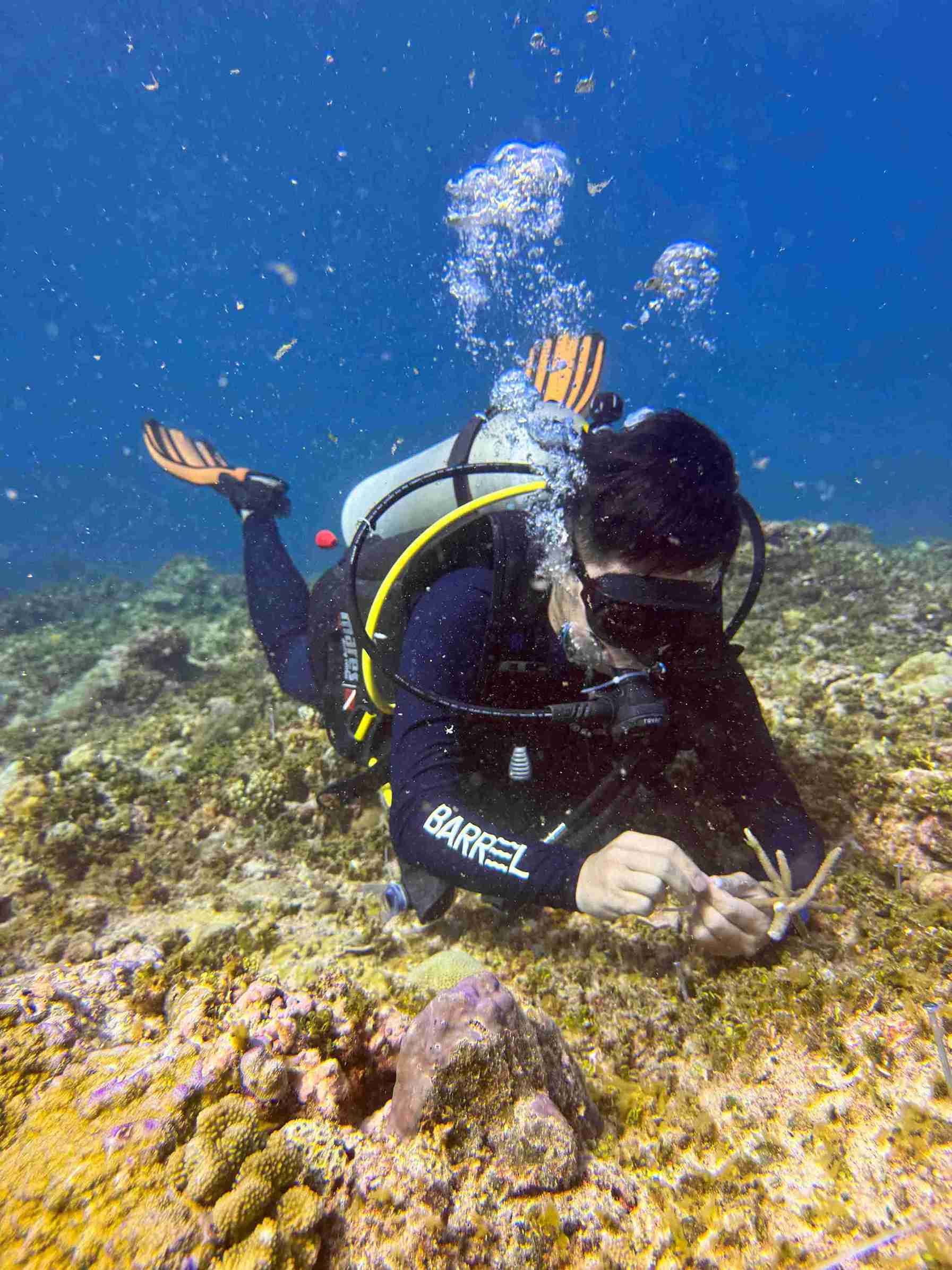
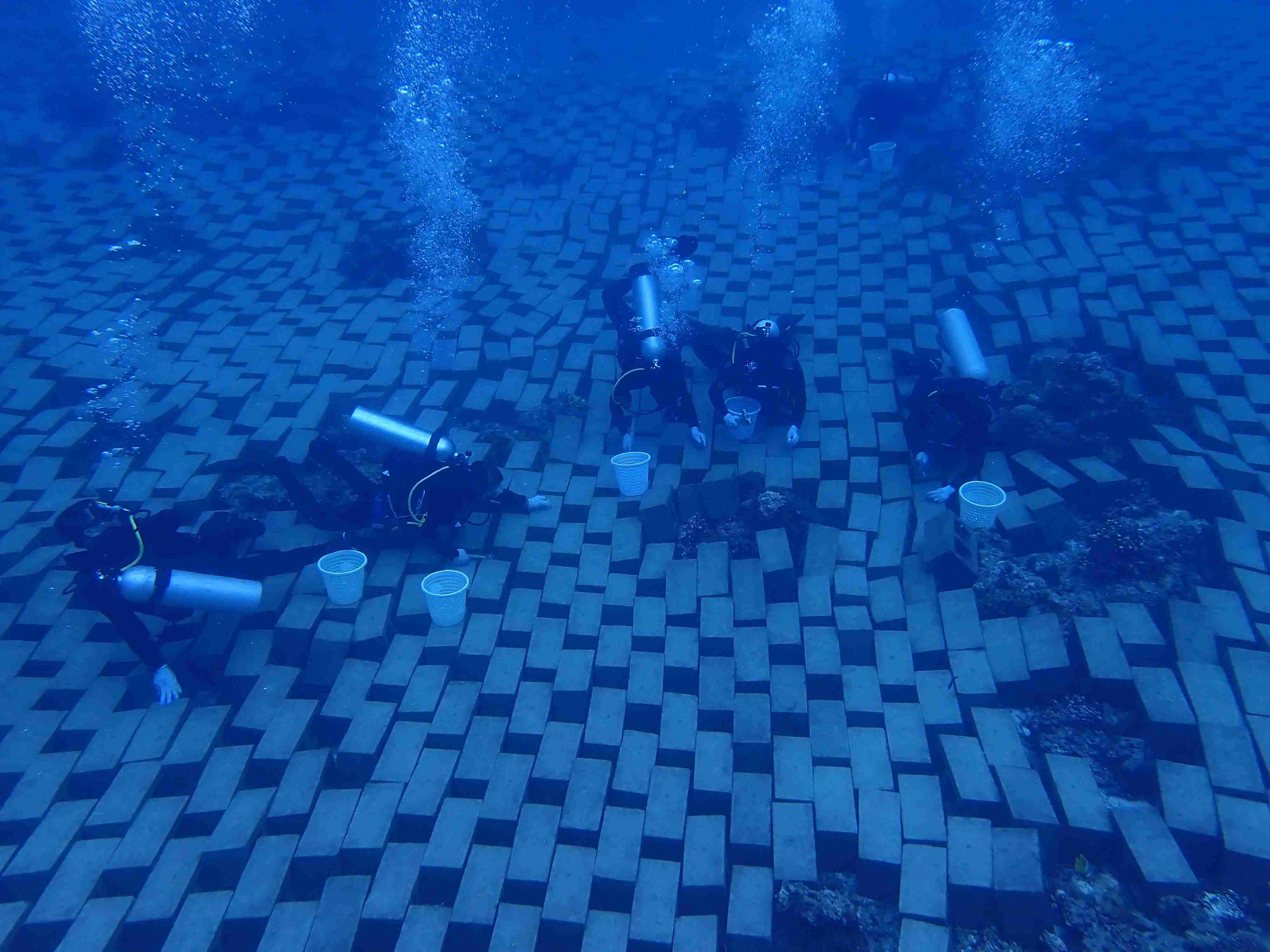
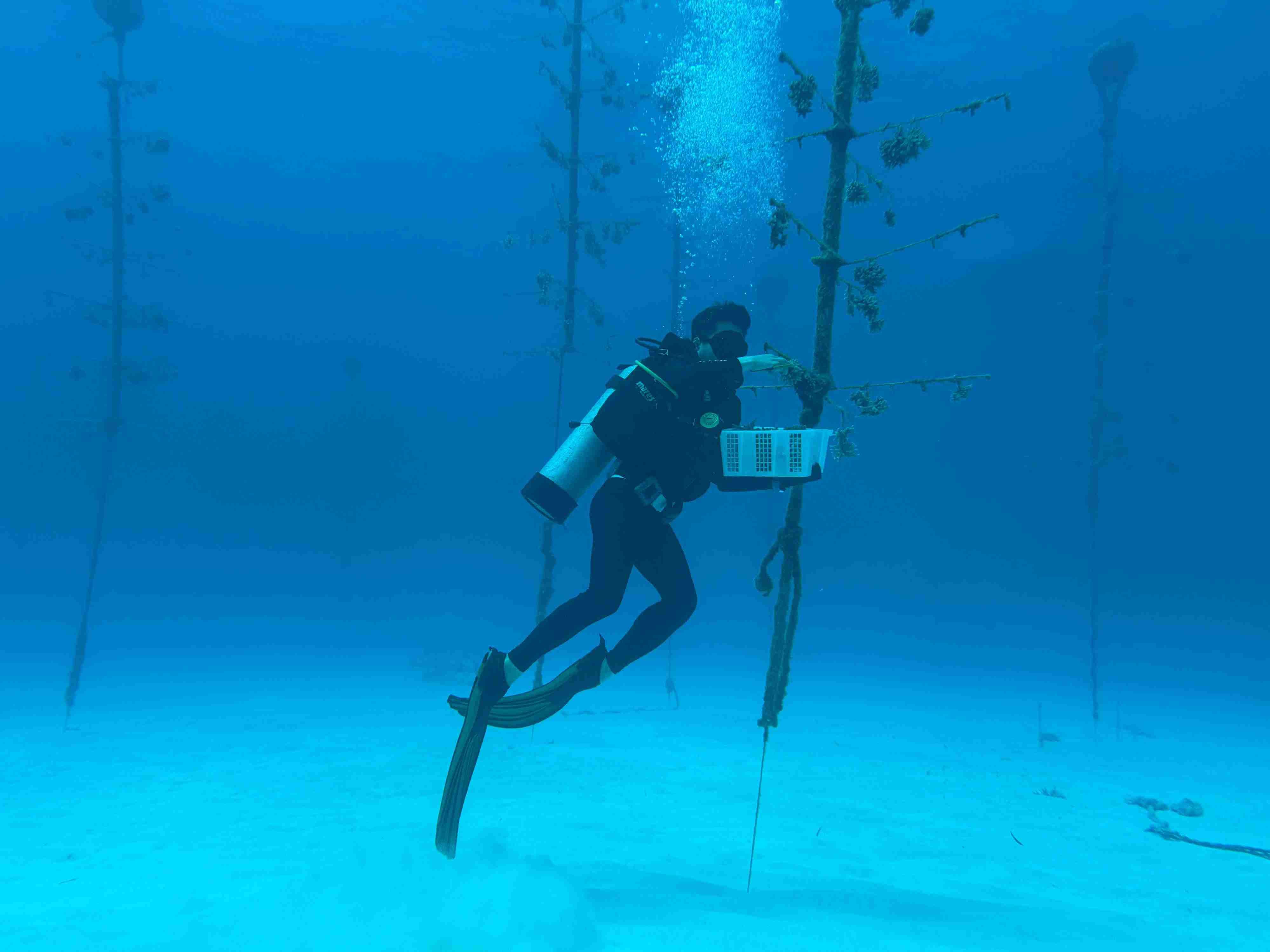
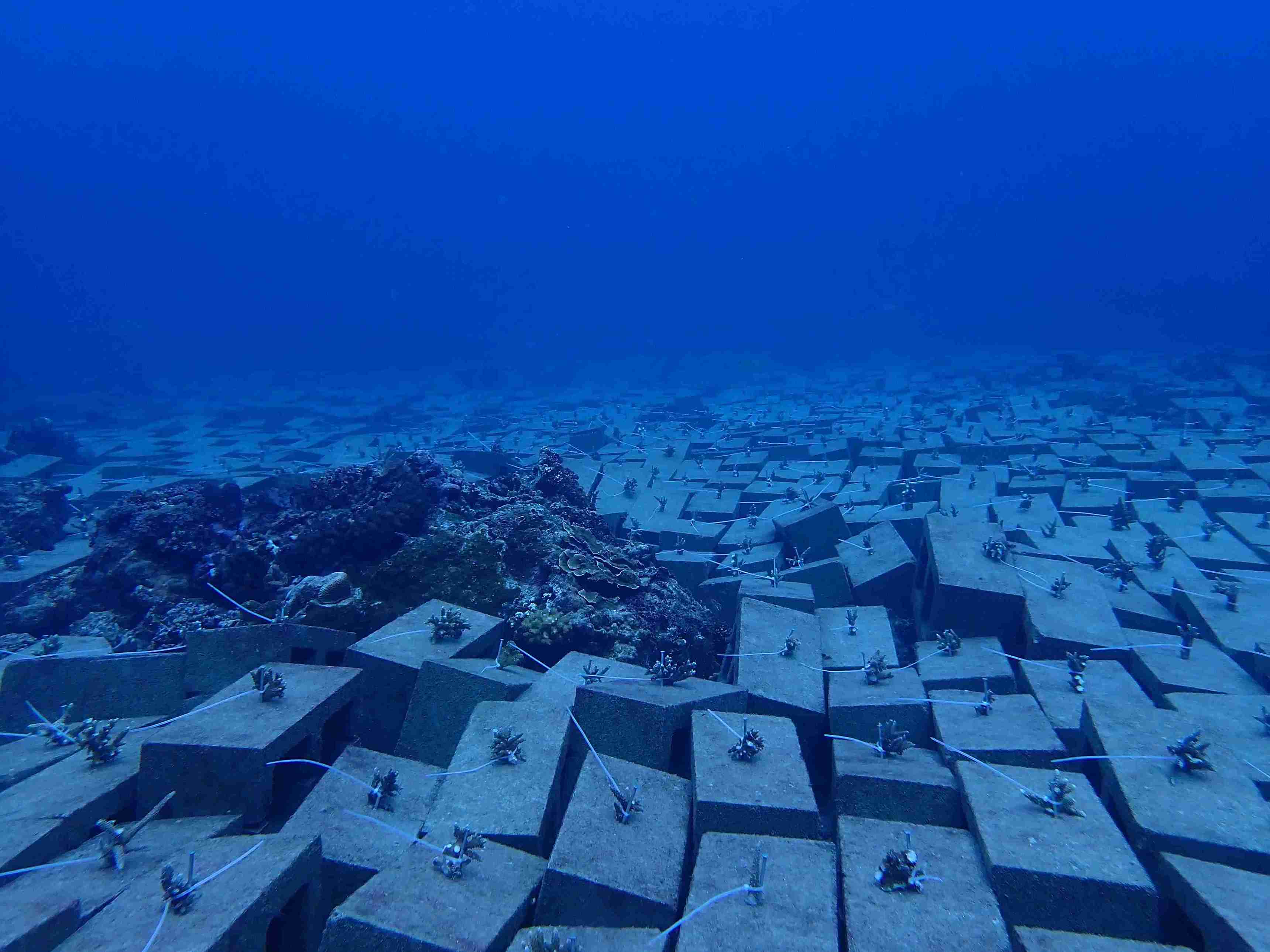
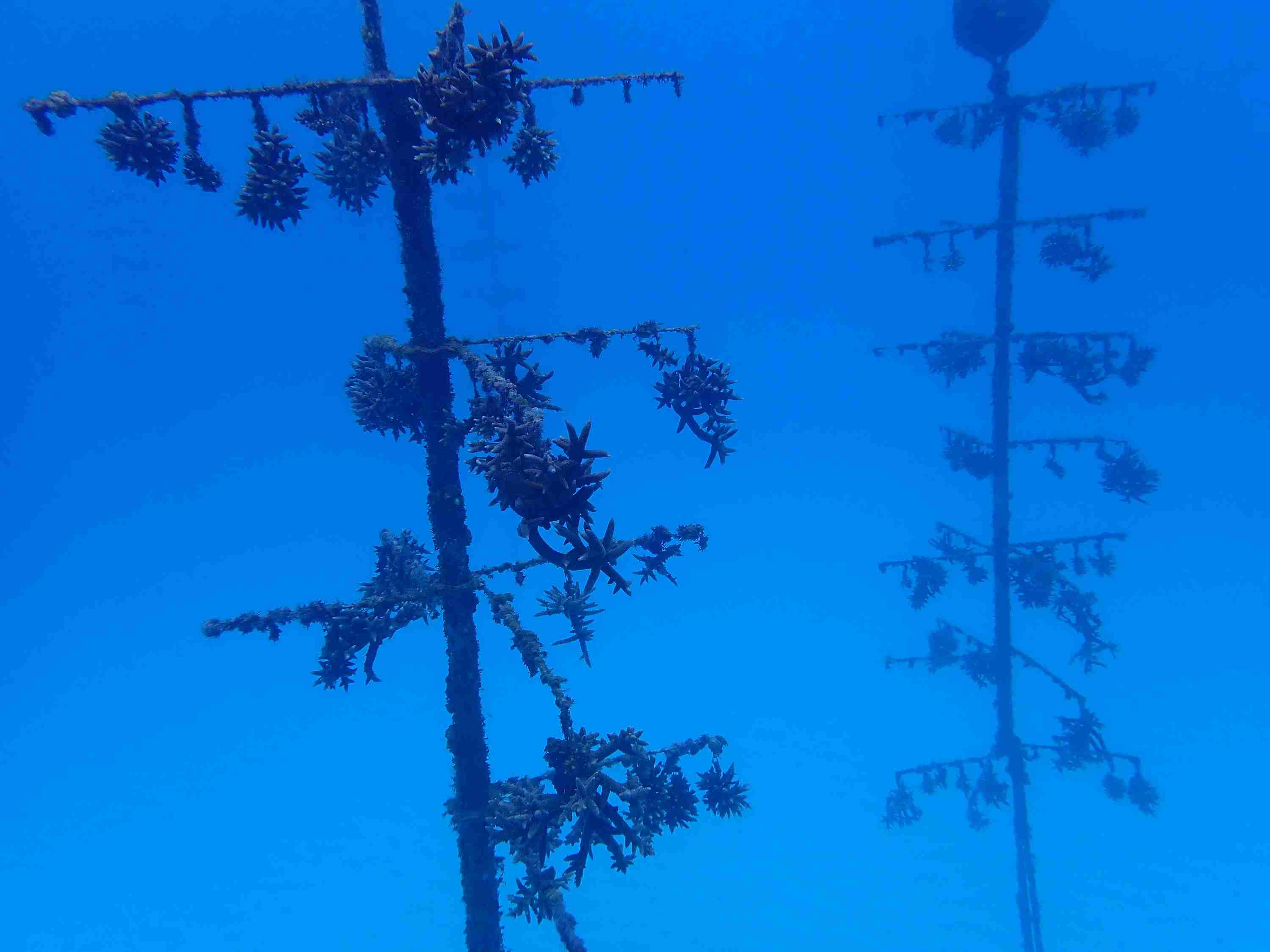
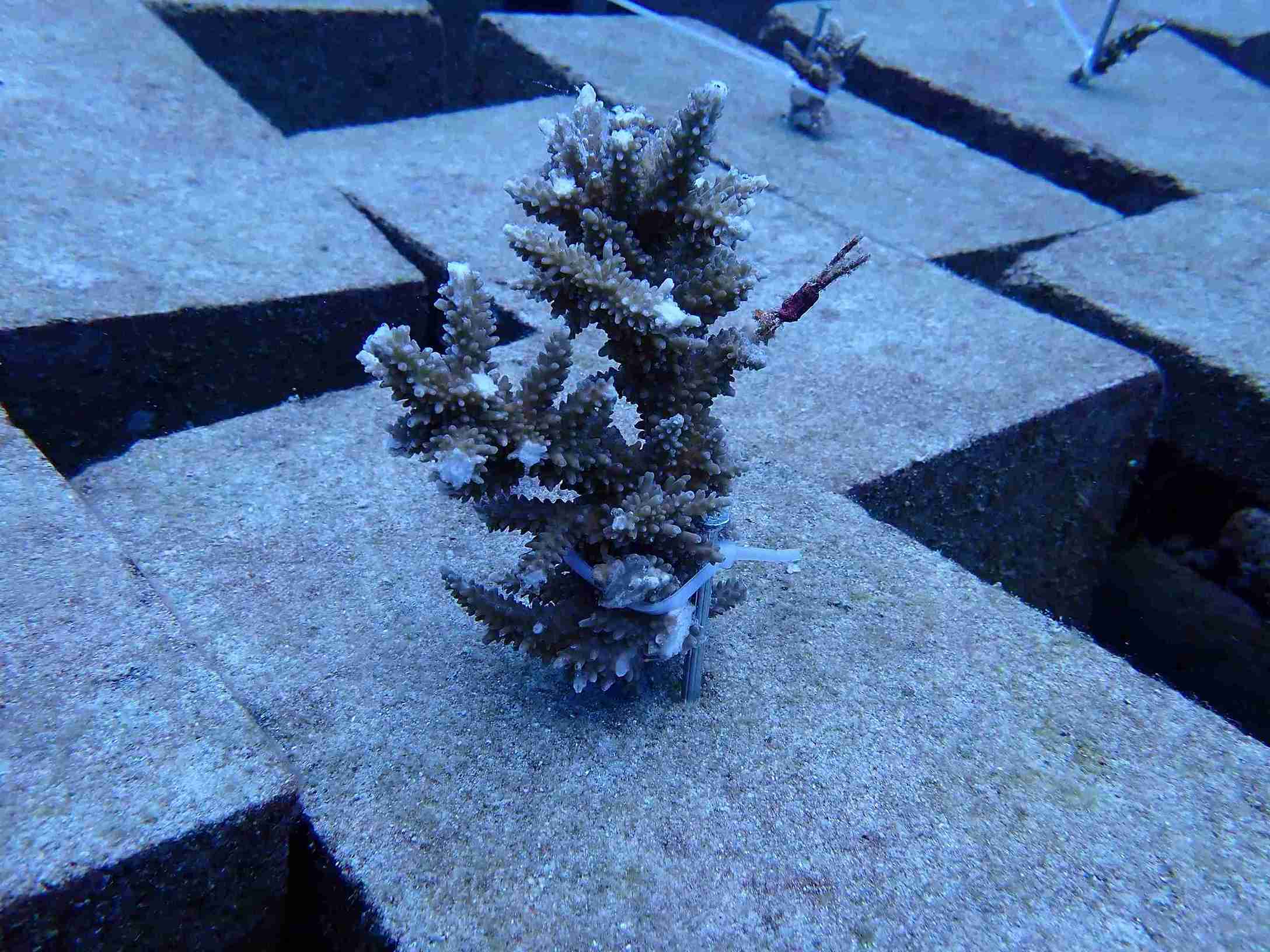
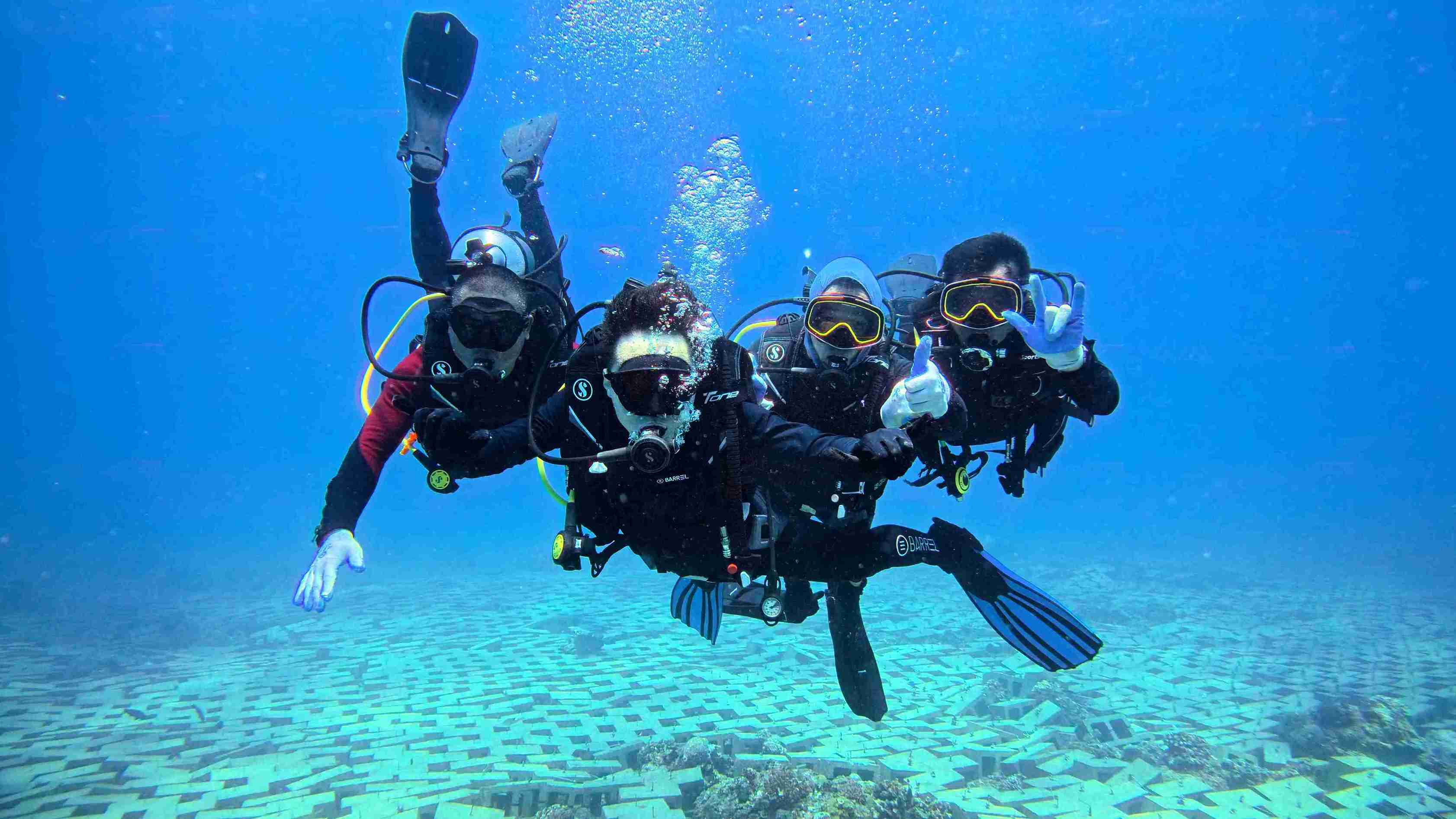
The Coral Planting Project is an ecological restoration film created in the China Southsea in 2025, arising from my participation in a Chinese marine scientific expedition. Working alongside marine scientists and professional divers, I took part in the transplantation of 24,000 coral seedlings. The film focuses on the process of “reforesting” the seabed, presenting coral restoration as an ecological practice shaped by time, environmental conditions, and sustained care. Its aim is not merely the survival of individual coral species, but the recovery of the regenerative capacity of the coral reef system as a whole.
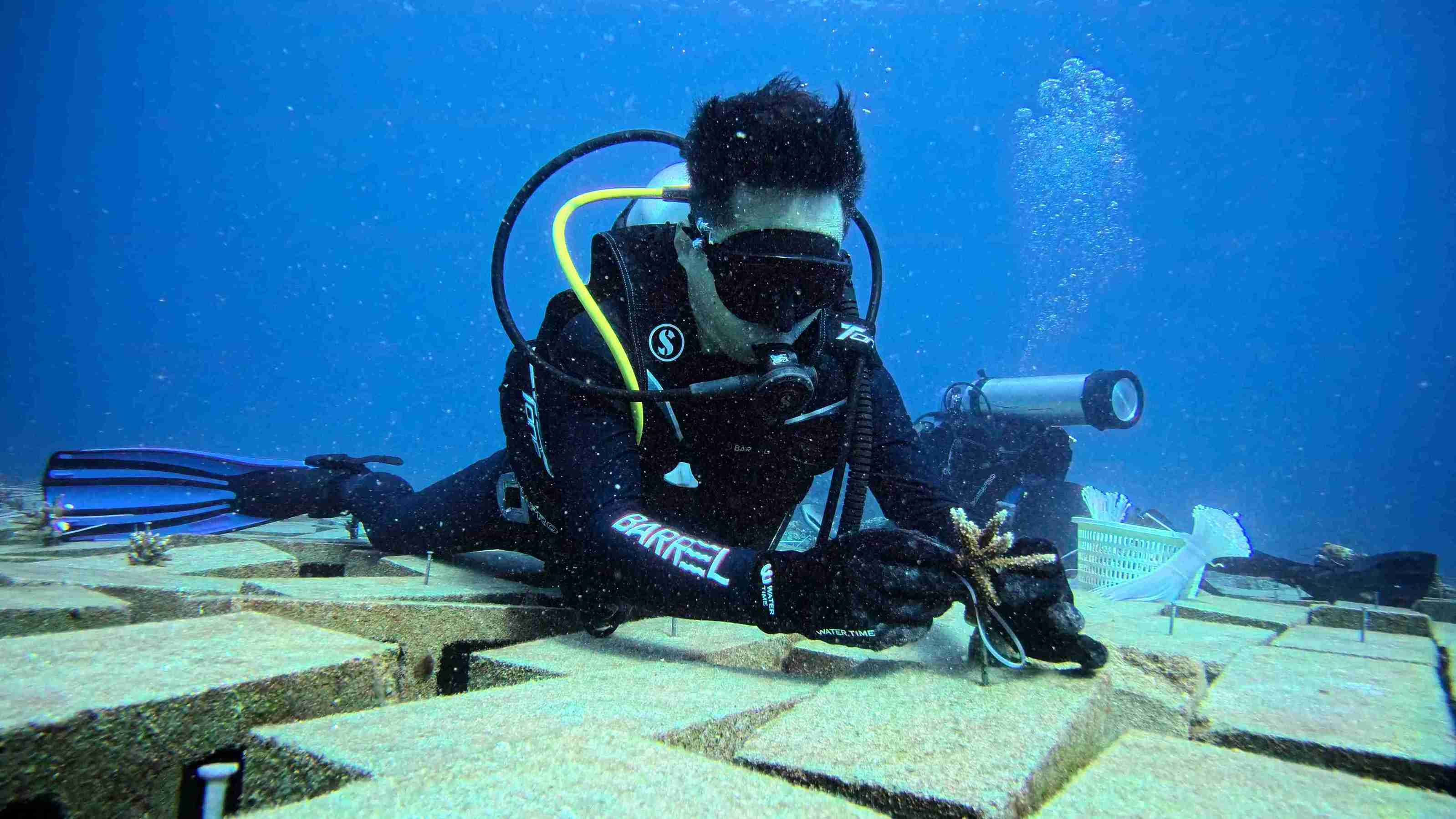
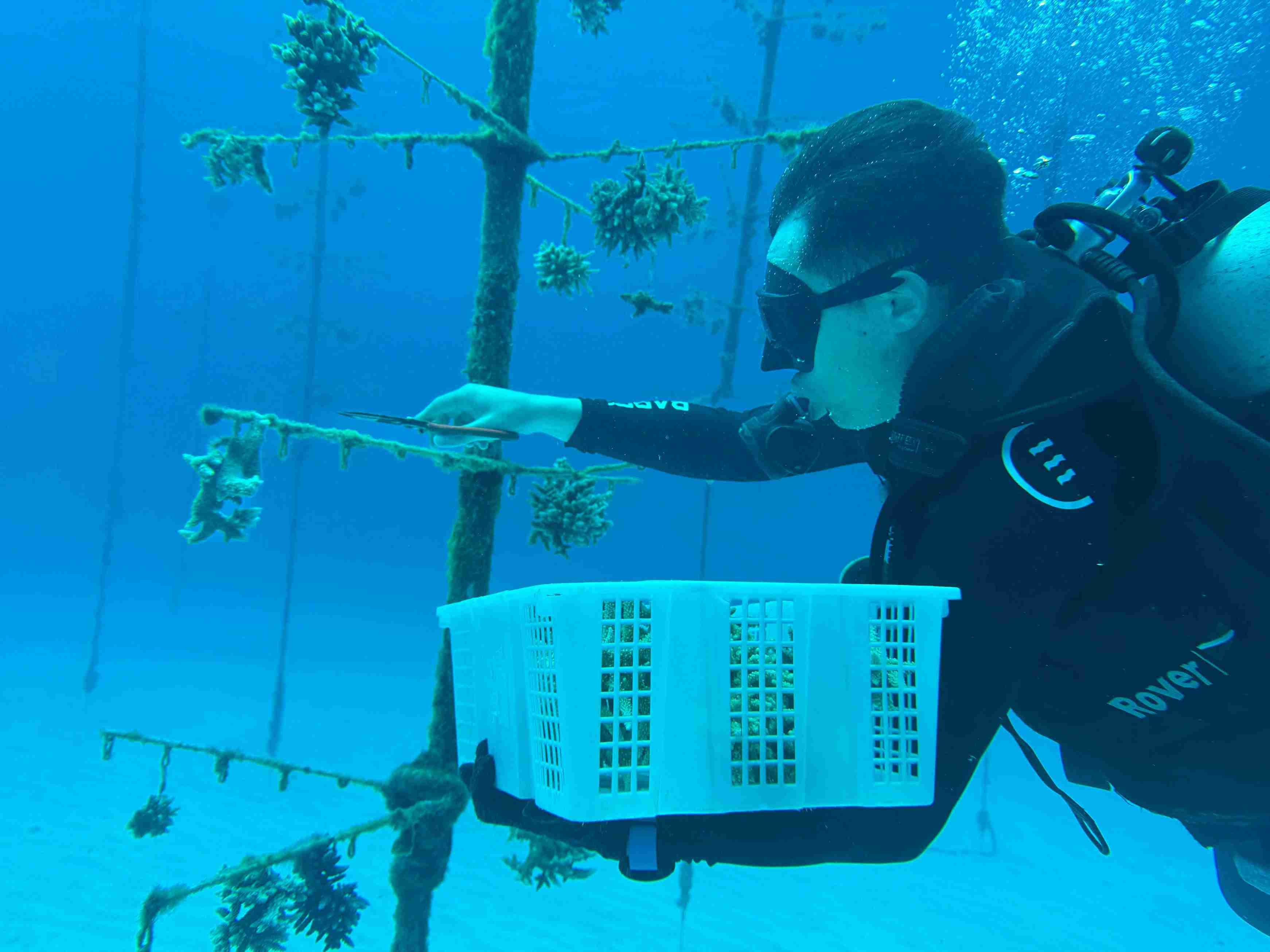
Unlike conventional nature documentaries, the work emphasizes the rhythmic silence of the underwater environment and the technical precision of restoration procedures. The repeated act of fixing coral fragments onto nursery structures becomes a meditative bodily practice, revealing the concept of “assisted recovery” as a gray zone between the artificial and the natural. Humans are no longer positioned as dominant agents, but as participants within an ecological process co-shaped by currents, light, temperature, and marine life. Each coral seedling functions as a modest yet tangible marker of hope within a damaged seascape.
At the same time, The Coral Planting Project operates as an artistic reflection on time, fragility, and ecological coexistence. By recording the gradual growth of coral colonies, the film bridges scientific documentation and artistic perception, drawing attention to the long-term and often invisible labor beneath the ocean’s surface. In this sense, art is not a representation of nature, but a perceptual apparatus that runs parallel to scientific practice, inviting viewers to reconsider humanity’s position and responsibility within the marine ecosystem.
The Coral Planting Project is an ecological restoration film created in the China Southsea in 2025, arising from my participation in a Chinese marine scientific expedition. Working alongside marine scientists and professional divers, I took part in the transplantation of 24,000 coral seedlings. The film focuses on the process of “reforesting” the seabed, presenting coral restoration as an ecological practice shaped by time, environmental conditions, and sustained care. Its aim is not merely the survival of individual coral species, but the recovery of the regenerative capacity of the coral reef system as a whole.
Unlike conventional nature documentaries, the work emphasizes the rhythmic silence of the underwater environment and the technical precision of restoration procedures. The repeated act of fixing coral fragments onto nursery structures becomes a meditative bodily practice, revealing the concept of “assisted recovery” as a gray zone between the artificial and the natural. Humans are no longer positioned as dominant agents, but as participants within an ecological process co-shaped by currents, light, temperature, and marine life. Each coral seedling functions as a modest yet tangible marker of hope within a damaged seascape.
At the same time, The Coral Planting Project operates as an artistic reflection on time, fragility, and ecological coexistence. By recording the gradual growth of coral colonies, the film bridges scientific documentation and artistic perception, drawing attention to the long-term and often invisible labor beneath the ocean’s surface. In this sense, art is not a representation of nature, but a perceptual apparatus that runs parallel to scientific practice, inviting viewers to reconsider humanity’s position and responsibility within the marine ecosystem.
Field Documentation
Field Documentation
现场纪实